



Commercial Treadmill Buying Guide: Features, Performance And Durability
It is totally different from buying commercial treadmills for a gym to picking one for your garage. These machines run 12–16 hours a day, take a beating from members of every size, and need to survive years of abuse with minimal downtime. Get the specs wrong and you're looking at constant repairs and unhappy members.
Here's what actually matters when you're comparing units.
Motor and Power: The Non-Negotiable
Input power tells you how hard the machine can work without overheating. For commercial running, you want at least 3.3 kW. The MH6100 runs a 3.3 kW motor on 200–240 V — enough for continuous use in a busy facility.
Speed range matters too. The MH6100 tops out at 20 km/h, the MH6000 hits 25 km/h, and the MH1001 ranges 1–20 km/h. If you're training serious runners, the higher ceiling is worth having.
Deck and Belt: Where Durability Lives
The running deck and belt take the most punishment. Thicker is better, up to a point.
- MH6100: 1650×550 mm running area, 2.4 mm belt, 25.5 mm deck
- MH6000: 1660×600 mm area, 3.3 mm belt (4.0 mm optional), 25.5 mm deck (40 mm optional), Φ110 mm rollersMH1001: 1550×585 mm area, 3 mm belt, 25.5 mm deck, Φ88 mm rollersLarger rollers reduce belt stress and heat. The MH6000's 110 mm rollers are a clear durability advantage for high-traffic floors. The 40 mm deck option is worth it if your members skew heavy or you run long-distance programs.
Incline Range and User Capacity
Decline training has become standard in commercial settings. The MH6100 and MH6000 both go from -5% to +18% and +20% respectively. The MH1001 offers 0–20%. If your programming includes downhill work, negative incline is a must.
Max user weight matters more than most buyers think. The MH6100, MH6000, and MH1001 all handle 200 kg. That covers virtually every member.
Console and Connectivity
Members expect more than a speed readout. The MH6100 offers an 18.5-inch LED with optional touchscreen. The MH6000 steps up to 23.6-inch LED with optional touch, plus Wi-Fi, entertainment, wireless charging, and AI exercise prescription with virtual scenery and online ranking.
The MH1001 gives you 23.6-inch LED or touchscreen with USB charging. Heart rate monitoring across these units runs 50–256 bpm — accurate enough for interval training.
For facilities leaning into connected fitness, the MH6000's smart features justify the extra weight (255 kg for TFT vs 242 kg for LED). For straightforward commercial running, the MH6100 at 211 kg is easier to position and service.
Alternative Cardio Formats Worth Considering
Not every member wants to run. The hybrid MH9600 combines stepping, elliptical, and running in one unit — 188 kg, 150 kg max user, self-powered with 20 resistance levels and a 700 mm stride. It's a smart pick for facilities with limited floor space.
The non-motorized MH6800 eliminates electrical infrastructure entirely. Good for boot camps, sled-style training, and anywhere power routing is a headache.
Matching Cardio With Strength
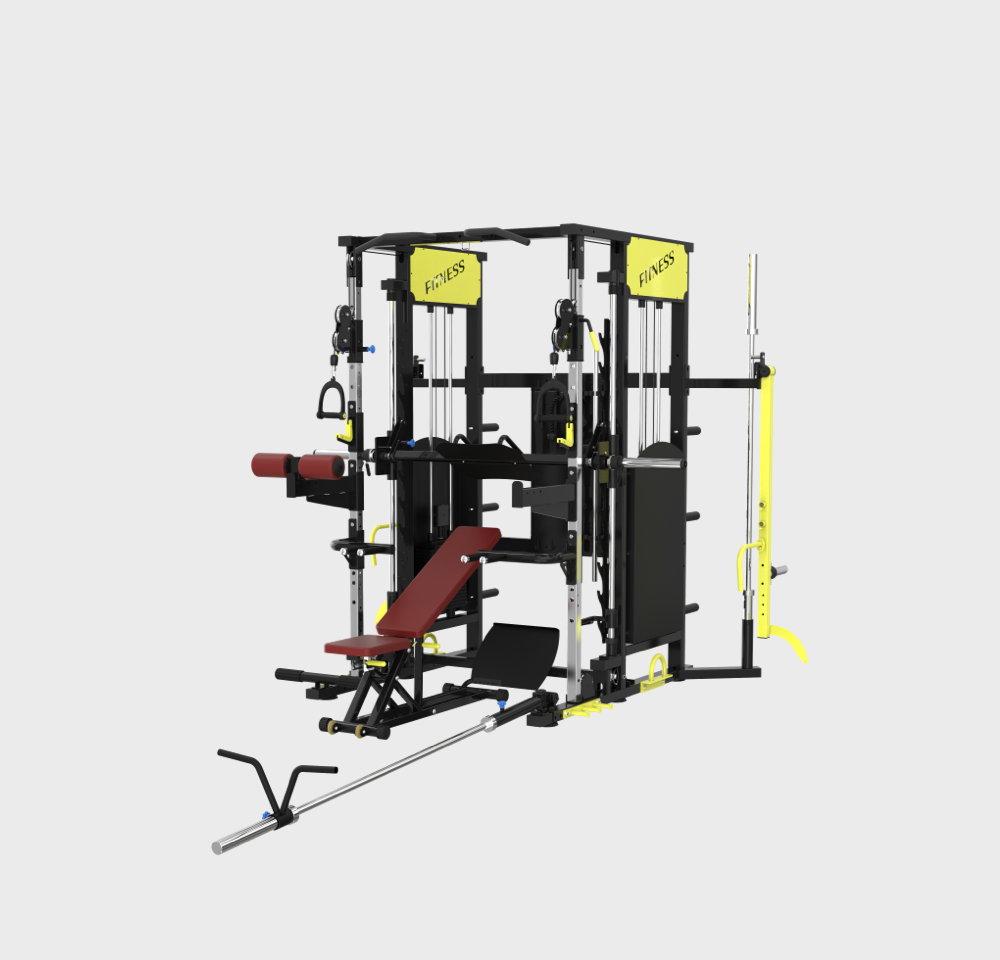
Cardio is half the floor plan. Buyers outfitting full facilities also weigh strength stations. The PL-08A Multi-functional Smith Machine

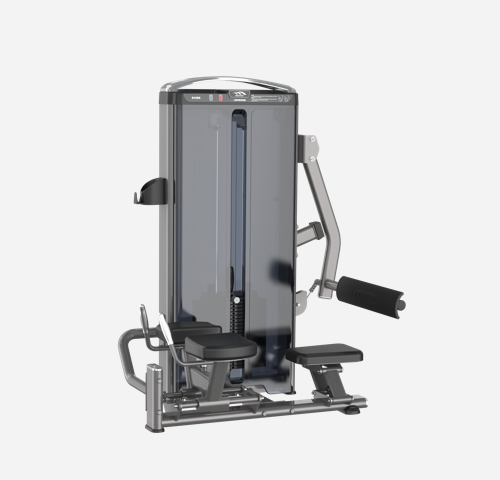
For targeted work, the T8-005 Triceps Press uses a 100 kg weight stack, 50 mm round tube, and is rated to 1000 kg max effective load with 100,000-cycle durability testing. The MEL-016A Standing Leg Extension
What to Buy Actually
For high-traffic commercial running, the MH6000 delivers the best durability package — bigger rollers, thicker belt options, and smart features that keep members engaged. The MH6100 is the practical workhorse if you don't need the connected extras.
Check your power infrastructure before committing to any 3.3 kW unit. And budget for preventive maintenance — belts, decks, and rollers wear regardless of build quality. The machine that lasts isn't the cheapest one; it's the one you service on schedule,even buying commercial online.
